The Miami County Auditor Clerk of Court page explains how two core county offices manage court records, official filings, and case management in Miami County, Ohio. These offices maintain verified public records related to property activity, court proceedings, and legal documentation. Their work supports record accuracy, filing consistency, and public record availability for county matters. Many legal and property-related processes rely on the data handled by these offices. Clear information about their functions helps users locate the correct records without delays. Reliable record handling strengthens trust in county-level documentation.
This page focuses on the roles of the Miami County Auditor and the Clerk of Court, how their responsibilities differ, and where their duties connect. The Auditor manages financial and property-related records, while the Clerk of Court maintains court case files and filings. Both offices contribute to structured record systems used by courts, agencies, and the public. Accurate role clarity reduces filing errors and misplaced requests. Well-organized content supports search intent, improves relevance for Google HCS and RankBrain, and delivers focused information for record-based queries.
What Is the Miami County Auditor’s Office?
The Miami County Auditor’s Office serves as the county’s chief fiscal office and maintains property tax records and real estate records. It plays a central role in financial oversight and public records management for Miami County, Ohio.
Role of the Miami County Auditor as Chief Fiscal Officer
The Miami County Auditor functions as the county’s chief fiscal officer and record authority. This office tracks county finances, manages official filings related to property and taxation, and maintains accurate public records. By overseeing financial reporting and documentation, the auditor supports transparency and accountability across county operations.
Property Tax Assessment and Financial Oversight
A core responsibility of the Miami County Auditor involves property tax assessment. The office reviews property values using state-approved methods and maintains property tax records that support local funding. These assessments directly impact schools, public safety, and infrastructure, making accuracy and consistency essential to county finances.
Public Services and Real Estate Records
The auditor’s office provides public-facing services tied to real estate records and tax data. These public records include property ownership details, parcel information, and valuation history. Residents and professionals rely on these records to verify property data and review tax-related information maintained by the county.
Difference Between the Auditor and Other County Offices
The Miami County Auditor often gets confused with other offices, though each role stays distinct. The auditor focuses on tax assessment, financial oversight, and property records. The Clerk of Court manages court records, case management, and filings related to legal proceedings.
A simple comparison helps clarify roles:
| County Office | Primary Focus |
|---|---|
| Miami County Auditor | Property tax records, tax assessment, real estate records |
| Clerk of Court | Court records, official filings, case management |
| County Treasurer | Tax collection and payment processing |
What Is the Miami County Clerk of Courts?
The Miami County Clerk of Courts is the official office responsible for keeping court records accurate, organized, and available to the public. This office supports the county court system by managing case files, dockets, payments, and legal documents from start to finish. The Miami County Clerk of Courts serves as the record-keeping center for county courts. This office works behind the scenes to keep court records, dockets, and official filings properly recorded and maintained. Judges rely on this office for accurate case information, and the public relies on it for reliable court data.
Court Records and Docket Management
One of the core duties involves maintaining court records and dockets. Every case filed with the court receives a docket entry. That entry tracks hearings, filings, rulings, and case status changes. Clear docket records help the court system stay organized and transparent.
Key responsibilities include:
- Receiving and recording legal filings
- Assigning case numbers and docket entries
- Tracking court activity from filing through resolution
- Supporting case management for multiple court divisions
Each document becomes part of a permanent legal record. Strong record preservation practices help protect the integrity of these files over time.
Filing, Indexing, and Record Preservation
The Clerk of Courts handles daily legal filing services. Attorneys, agencies, and members of the public submit documents for civil, criminal, and traffic cases. Staff members file each document, index it correctly, and store it within the proper case record.
This process includes:
- Reviewing documents for filing requirements
- Indexing records by case type and number
- Preserving paper and digital files for long-term reference
Accurate indexing supports quick record searches and dependable case history reviews.
Collection of Fines, Bonds, and Court Fees
The office plays a financial role by collecting court-ordered payments. These include fines, bonds, court costs, and fees. Payment records link directly to case files, which supports accurate accounting and clear case status updates.
Common payment types handled:
- Criminal and traffic fines
- Bond postings and releases
- Filing fees and court costs
Payment processing supports smooth court operations and timely case closure.
Auto Title Division Services
The Auto Title Division operates under the Clerk of Courts. This division handles vehicle titles and related filings for Miami County residents. Services cover title transfers, replacement titles, and lien recordings. Accurate title records protect ownership rights and support lawful vehicle transactions.
Office Location and Hours
The Miami County Clerk of Courts maintains public offices with set business hours. Residents can visit in person for filings, payments, and title services. Phone contact remains available for procedural questions and service details. Office hours may vary by division, so checking current schedules before visiting helps avoid delays.
How the Auditor and Clerk of Court Offices Work Together
The Miami County Auditor and the Clerk of Court offices work side by side to manage financial records, property data, and court-related documentation. Each office has a distinct role, yet both support a shared public records system that residents rely on for accuracy and transparency.
Clear roles with connected responsibilities
The Miami County Auditor focuses on financial and property-related duties. This office handles property valuations, tax assessments, real estate transfers, and fiscal reporting for the county. These records form the financial foundation of many county services and legal processes.
The court clerk’s office, Miami County Auditor, works with, known as the Clerk of Court, who manages court records. This includes case files, dockets, judgments, and other official filings created during legal proceedings. The Clerk maintains the record history for civil, criminal, probate, and traffic cases. Each office stays within its legal scope. The Auditor does not manage court cases. The Clerk does not set property values or tax rates. Their coordination supports a complete and reliable public record system.
Shared role in public records and transparency
Both offices contribute to the county’s public records infrastructure. Financial data from the Auditor connects to court activity handled by the Clerk. For example, a property dispute filed in court links court case information with property ownership records. This connection helps residents, attorneys, and researchers confirm facts using consistent data sources. Through official filings and structured recordkeeping, both offices support public access court search tools. These tools let users review case status, property data, and related filings without confusion.
When residents use each office
Residents turn to the Auditor for matters tied to property and taxes. Common reasons include:
- Reviewing property tax assessments
- Checking real estate ownership history
- Confirming transfer or valuation details
Residents contact the Clerk of Court for legal record needs such as:
- Searching court cases and dockets
- Requesting copies of official filings
- Verifying hearing dates or case outcomes
Examples of integrated public needs
Some situations require interaction with both offices. A homeowner involved in a foreclosure case may review property records through the Auditor, then confirm court filings through the Clerk. A title professional may check tax history and confirm court judgments before finalizing a transaction. In each case, accurate records from both offices support informed decisions.
How to Access Court Records in Miami County
Court records in Miami County can be reviewed through official public search tools or requested directly from the Clerk of Courts. The correct method depends on whether the record is available online or requires in-person record retrieval.
Using the Official Miami County Public Search Tool
Miami County provides a public access case search tool that allows users to review many court records online. This tool supports basic case management needs and displays case summaries, docket activity, and filing history.
Official Public Access Tool URL:
https://www.miamicountyohio.gov/684/Public-Access
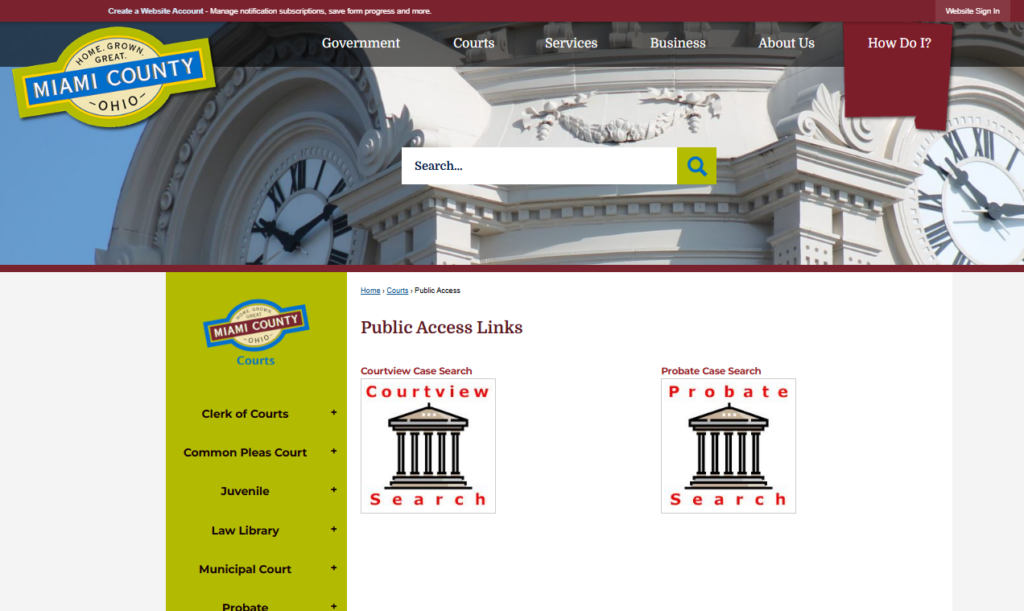
This page connects users to the county’s court case lookup system, often referred to as a search docket. It shows case numbers, party names, filing dates, and case status for several court divisions.
Online search tools typically include:
- Civil, criminal, traffic, and probate case listings
- Case status updates and scheduled hearing dates
- Party names, attorneys, and case numbers
- Docket entries for many official filings
Some documents may appear as scanned images or file titles only. Document visibility depends on court rules and privacy limits.
What Records Are Available Online vs. In Person
Miami County separates records based on format, age, and legal restrictions.
Records commonly available online
- Case summaries and docket history
- Filing titles and dates
- Hearing schedules and outcomes
Records are usually requested in person
- Certified copies
- Sealed or restricted case files
- Older archived records
- Exhibits or large filing packets
In-person record requests are handled by the Clerk of Courts’ office.
Clerk of Courts Official Page:
https://www.co.miami.oh.us/117/Clerk-of-Courts
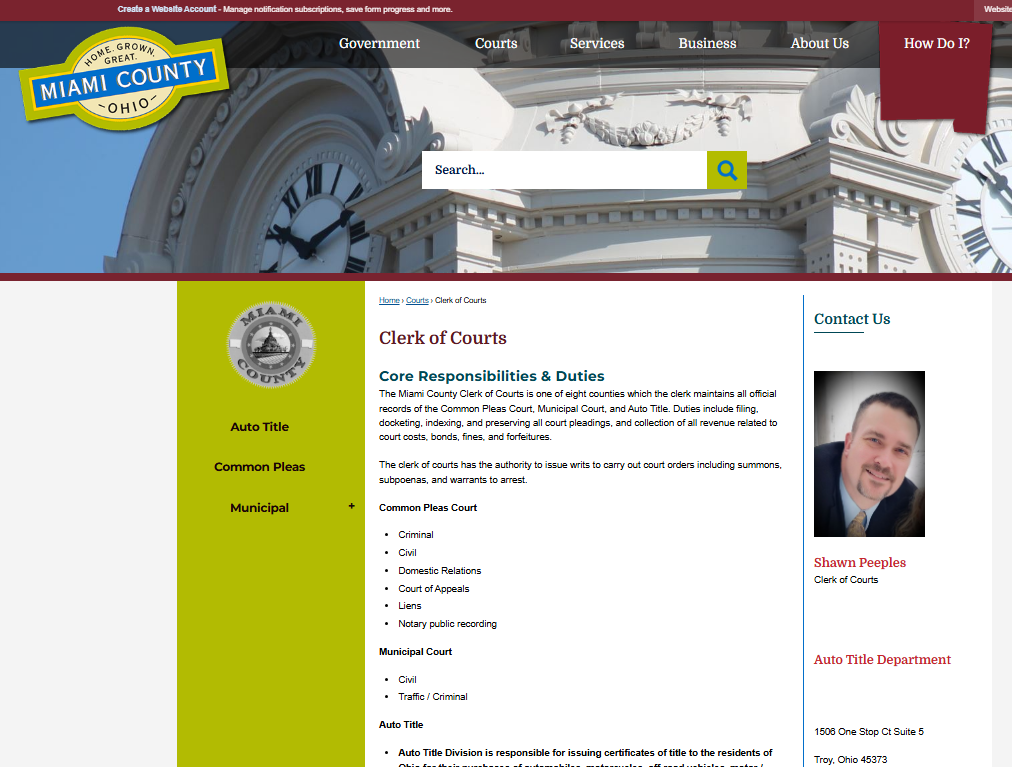
This office manages official court files and supports the full retrieval of records.
How to Search by Name or Case Number
The public search system allows two main search options. Accurate details improve results and reduce confusion.
Search by party name
- Enter full or partial first and last names
- Review spelling variations
- Compare results for similar names
Search by case number
- Enter the complete case number
- Include year and case type identifiers
- Double-check numbers before submitting
Search results may display multiple cases. Selecting a case opens the docket view, which lists filing activity, hearing dates, and current case status.
Steps to Request Certified Copies
Certified copies are used for legal, financial, and official purposes. These copies include a clerk seal and certification.
Basic request steps
- Locate the case number using the public search tool
- Identify the document needed
- Contact the Clerk of Courts’ office
- Submit the request in person or by mail
- Pay applicable copy and certification fees
Some requests allow mailed processing. Processing time varies based on record age and request volume.
Common Documents & Services Offered by Each Office
The Miami County Auditor and the Clerk of Court handle different records, yet both offices provide documents that the public often needs. These services cover property tax records, court records, and official filings, offered online and in person.
Auditor Services: Property and Financial Records
The Miami County Auditor focuses on property and fiscal records that support taxation and county finances. These materials help property owners, buyers, and researchers review valuation and tax history.
The most requested Auditor services include:
- Property tax records showing assessed values and tax status
- Property reports with parcel details, ownership history, and land data
- Financial reports that outline county revenue, expenditures, and audits
Property tax records often play a role in home sales, refinancing, and appeals. Property reports support title reviews and planning needs. Financial reports provide transparency into county operations and budgeting.
Clerk of Court Services: Court Records and Filings
The Clerk of Court manages records tied to court activity and legal processing. These records document how cases move through the court system and preserve official history.
Common Clerk services include:
- Court docket records listing hearings, filings, and case progress
- Official filings such as complaints, motions, judgments, and orders
- Fine and fee payment processing for traffic, criminal, and civil cases
Court records help parties confirm case status, hearing dates, and outcomes. Official filings serve as permanent legal documentation used by attorneys, agencies, and the public.
Online Forms and Digital Resources
Both offices publish forms and record tools online to reduce in-person visits. Digital resources often include searchable databases, downloadable request forms, and payment portals.
Online services may cover:
- Property tax lookups and printable summaries
- Court docket searches by name or case number
- Electronic fine payment options
- Request forms for copies of court records or property reports
Online tools support faster record review and reduce wait times.
In-Person Services and Required Identification
Some records require an office visit, especially certified copies or complex requests. Each office maintains public counters during business hours.
Visitors may need:
- A government-issued photo ID
- Case numbers or parcel numbers for faster service
- Payment for copies or certifications
Staff members help locate court records, explain official filings, and process property tax record requests. In-person service suits detailed questions or time-sensitive needs.
(FAQs) About the Clerk of Court
The Auditor and Clerk of Court in Miami County handle different responsibilities, each serving residents in distinct ways. The Auditor focuses on financial and property matters, while the Clerk of Court manages court filings and legal records.
What is the difference between the Auditor and the Clerk of Court?
The Miami County Auditor manages property records, tax assessments, and official financial filings, while the Clerk of Court handles court records and case documents. Residents contact the Auditor for property valuations, tax questions, and real estate information, whereas the Clerk oversees filing, indexing, and maintaining court dockets. This separation ensures clarity in responsibilities, allowing residents to approach the correct office for specific needs. Both offices provide public access to court search tools for transparency, and their services often complement each other when property and legal matters overlap. Understanding their distinct roles helps residents save time and avoid confusion.
How do I find Miami County court case records?
Court case records in Miami County are maintained by the Clerk of Court, who provides public access to dockets and official filings. Residents can search records by name, case number, or filing date using the Clerk’s online tools or in-person services. Available details include case status, involved parties, and scheduled hearings, which are crucial for legal and administrative purposes. For accurate results, using exact names or case numbers is recommended. Certified copies can also be requested if official proof of a filing or judgment is needed. The process supports case management and helps residents stay informed about ongoing legal matters.
Where do I pay fines or fees?
Fines and fees are primarily handled through the Clerk of Court, covering court costs, traffic violations, and civil case payments. Residents can pay in person at the office, online through authorized portals, or by mail with the correct case reference. Accurate case numbers ensure that payments are recorded properly in court records, avoiding delays or errors. Payments through official channels are processed efficiently, and receipts serve as proof for legal or financial purposes. This system helps the county maintain accurate records while providing convenience to residents.
How do I request a certified record?
Certified records are official copies of legal filings, court documents, or property records validated by the Clerk or Auditor. To request one, residents provide the document details, including case numbers or property parcel IDs, either in person or through online forms. Fees vary depending on the type of record requested, and certified copies are accepted for legal, administrative, or official purposes. The Clerk ensures the records are authentic and up to date, which supports record request reliability. Residents benefit from this service when proof of filing, property status, or judgments is needed for official matters.
Are Miami County court records public?
Most Miami County court records are public, allowing residents to view civil, criminal, and probate case information, while certain sensitive records, such as juvenile or sealed cases, have restricted access. Public documents include case dockets, involved parties, and filing status, which promotes transparency and accountability. Records can be reviewed online through the Clerk’s public access court search tools or in person. This access provides residents and professionals with the necessary details for legal or administrative decisions. Ensuring proper use of these records supports both compliance and civic awareness within the county.