The Miami County Auditor Court Docket displays upcoming hearings, trial dates, and case listings across county courts. It provides structured details for individuals needing the court schedule, the Miami County hearing calendar, or case docket instructions. Users can reference entries with case numbers, parties involved, and scheduled times for clear planning. This resource also highlights official record procedures while linking to verified Miami County sources. The docket helps track case progress, identify important dates, and prepare necessary documentation. Each listing is organized for quick reference, making it easier to follow court activities. Both residents and legal professionals rely on this information for accuracy and timely updates. Maintaining awareness of upcoming hearings and trials ensures all parties remain informed and compliant.
This page, published through the Official Miami County Auditor Site, organizes case listings by type and status, covering civil, criminal, probate, and traffic matters to support clear and transparent public access. Each docket entry provides actionable information for court searches and record tracking, allowing users to review trial dates, hearing schedules, and procedural notes with ease. Tables, examples, and clear instructions improve usability, while the structured layout helps compare cases, identify priority hearings, and reference case history efficiently. Frequent updates ensure the most current Miami County court schedule information remains available to individuals and legal professionals.
What is a Court Docket?
A court docket is an official record that lists all scheduled cases for a court. It shows key details such as hearing dates, trial dates, and the order of proceedings. A court docket serves as a central reference for the flow of court activities in Miami County. It provides clear information about each case, helping attorneys, parties, and the public track scheduled events efficiently. The docket typically includes case numbers, parties involved, the type of case, hearing dates, and trial dates, offering a snapshot of upcoming court proceedings. Users can consult the docket to identify when a specific case is set for trial or a hearing.
Hearing Calendar and Court Schedule
The hearing calendar is part of the court docket that lists all hearings scheduled for specific dates. It shows pretrial motions, status conferences, arraignments, and other court events. Each entry generally contains the case number, names of the parties, type of hearing, assigned judge, and location. The court schedule provides an organized timeline for these hearings and trials. It helps the court staff manage daily proceedings and allows participants to plan attendance accordingly. Miami County publishes this information to promote transparency and ensure fairness in legal proceedings.
Case Listings and Trial Dates
Case listings summarize individual cases and their current status. Each listing may include:
- Case Number: Unique identifier for tracking
- Filing Date: When the case was officially filed
- Case Type: Civil, criminal, probate, or traffic
- Status: Scheduled, continued, or disposed
Trial dates are the officially scheduled days when the court hears a case fully. They are different from preliminary hearings or pretrial conferences, which appear separately in the hearing calendar. Court staff update the docket regularly to reflect changes in trial dates or case status, ensuring information remains accurate.
Using the Docket for Public Court Proceedings
Individuals seeking information about court events can follow public court procedures without any special access. This includes:
- Docket search for specific cases
- Case status tracking to monitor outcomes or scheduled hearings
- Record requests for official documentation
Miami County provides detailed instructions on how to reference the court docket, making it easier for lawyers and the public to follow case developments. Proper use of the docket supports clarity, reduces scheduling conflicts, and ensures that parties are informed about upcoming proceedings.
How to Find and Use Miami County Court Dockets
Miami County court dockets show current case information such as hearing dates, trial listings, and status updates, and users can search them on the official county website or view results on mobile devices or in person at the Clerk’s office. Conducting a docket search and interpreting entries helps residents, attorneys, and others stay informed about court schedules and upcoming proceedings.
Online Court Docket Search
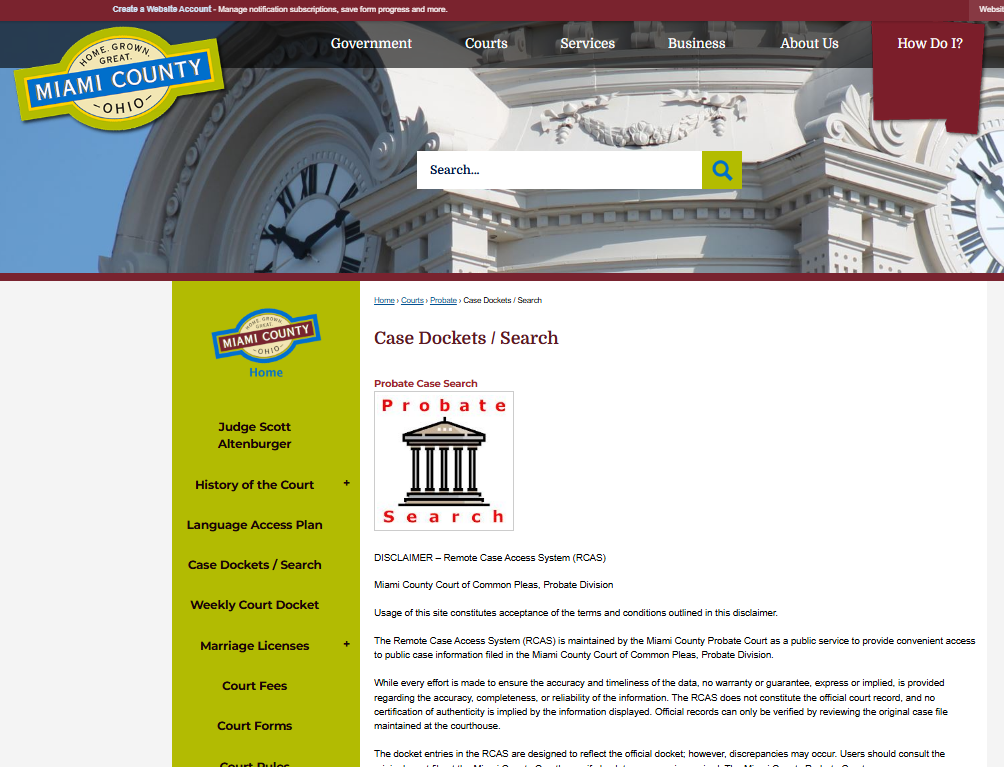
The official Miami County docket search tool is available at the Case Dockets / Search page on the county’s website https://co.miami.oh.us/1046/Case-Search and allows users to perform a docket lookup by entering a case number, party name, citation number, or date range, select the court type, and view results that include case numbers, parties, scheduled hearing calendar events, and status for each case.
Docket Entry
A docket entry typically includes the case number, parties involved, type of case, scheduled hearing calendar event or trial date, current status, and the judge or magistrate assigned, so readers can confidently check case listings and track hearing dates, trial times, and procedural updates based on the official Miami County docket search results and status codes.
Mobile & In‑Person Options
When online access is difficult, users can view the official docket search through a smartphone browser or visit the Clerk of Courts office at the Miami County courthouse to request printed docket records or assistance with searches by case number, party name, or date, ensuring they can check trial dates and court schedules even without internet access.
Miami County Court System Overview
Miami County operates a structured court system to handle different types of cases efficiently. Each court manages specific types of legal matters, and all maintain official dockets that track case schedules and hearings. The county’s court system includes the Common Pleas Court, Municipal Court, and Probate Court, each with distinct roles and docketing procedures. These courts organize case information to ensure transparency, accessibility, and proper scheduling for all parties involved.
Common Pleas Court
The Miami County Common Pleas Court handles major civil, criminal, and domestic cases. Civil cases include disputes over contracts, personal injury claims, and property matters, while criminal cases cover serious offenses such as felonies. Domestic cases involve divorce, child custody, and support issues.
Docketing in the Common Pleas Court:
- Civil Docket: Lists all civil cases with scheduled hearings, motions, and trial dates.
- Criminal Docket: Tracks criminal proceedings, including arraignments, plea hearings, and trials.
- Scheduling: Judges assign hearing and trial dates, and court staff update the docket to reflect changes.
Municipal Court
The Municipal Court primarily deals with misdemeanor criminal cases, traffic violations, and small civil disputes. This court helps manage cases that require quicker resolution and focuses on local ordinance enforcement.
Municipal Court Docketing:
- Traffic Docket: Tracks speeding tickets, traffic citations, and other violations.
- Criminal Docket: Includes lesser criminal offenses and scheduled hearings.
- Court Schedule Miami County: Hearing dates are clearly listed to help defendants and attorneys prepare in advance.
This court maintains online schedules and public dockets for transparency. Users can check their case dates and review upcoming hearings, which makes it easier to comply with court requirements.
Probate Court
The Probate Court manages cases related to estates, wills, guardianships, and adoptions. It ensures the orderly administration of estates and protects the rights of minors or individuals under guardianship.
Probate Court Docketing:
- Case Listings: Each probate case is listed with its scheduled hearings, such as estate administration, guardianship appointments, or adoption proceedings.
- Trial Dates: Dates are set by the judge and updated on the official docket to maintain accuracy.
Probate Court dockets are crucial for attorneys, executors, and family members. Public access to these records ensures that all proceedings remain transparent while respecting privacy laws.
Reading Miami County Hearing Calendar & Trial Dates
The hearing calendar shows the scheduled dates for court hearings, while trial dates indicate when cases are set for trial proceedings. Both tools help residents, attorneys, and court staff track and plan for upcoming court events in Miami County. The court schedule in Miami County requires knowing the difference between these two key types of court dates. The hearing calendar typically lists short, procedural matters such as motions, pretrial conferences, or status updates. In contrast, trial dates represent the official start of a full hearing where evidence is presented and a judgment is expected. Each entry provides essential details, including the case number, parties involved, courtroom, and assigned judge.
What the Hearing Calendar Shows
A hearing calendar acts as a public record of scheduled court proceedings for specific dates. It helps parties involved in a case, lawyers, and the public stay informed about upcoming hearings.
Key details included in a hearing calendar often consist of:
- Case Number: Unique identifier for the case
- Case Name: Names of the plaintiff and defendant
- Type of Hearing: Examples include motion hearing, pretrial conference, or status check
- Date and Time: When the hearing is set
- Location: Courtroom or judge’s assignment
This calendar is updated regularly to reflect changes or new scheduling. Checking the calendar frequently ensures parties do not miss important proceedings and helps coordinate with attorneys or witnesses.
Difference Between Hearing Dates and Trial Dates
It is important to recognize that hearing dates and trial dates serve different purposes.
- Hearing Dates: Typically shorter sessions to manage procedural matters, discuss motions, or address scheduling issues. They rarely resolve the case.
- Trial Dates: Longer sessions where evidence is presented, witnesses are called, and decisions are made. Trials often span multiple days depending on case complexity.
Keeping track of both ensures that participants are prepared and appear on the correct day. The Miami County court system maintains these dates in a clear and organized schedule to support transparency.
Example of Miami County Docket Entries
Here is a sample table to illustrate how hearing and trial dates appear on the official docket:
| Case Number | Case Name | Type of Event | Date | Time | Location |
|---|---|---|---|---|---|
| 2026-CV-101 | Smith v. Johnson | Motion Hearing | 01/28/2026 | 9:00 AM | Courtroom 2B |
| 2026-CR-055 | State v. Hernandez | Trial | 02/10/2026 | 10:00 AM | Courtroom 3A |
| 2026-FL-210 | Adams v. Adams | Status Conference | 01/30/2026 | 11:00 AM | Courtroom 1C |
| 2026-TR-005 | City v. Williams | Pretrial Hearing | 02/02/2026 | 1:30 PM | Courtroom 4D |
Common Case Types & Listings Explained
Miami County courts handle a variety of cases, each with its own procedures, schedules, and docket categories, including civil, criminal, family, traffic, and probate matters. Understanding these case types helps users interpret court schedules, case listings, and trial dates effectively.
Civil Cases
Civil cases involve disputes between individuals, businesses, or organizations, typically concerning money, property, or contracts. Miami County civil dockets include personal injury claims, contract disputes, property disagreements, and small claims under $6,000, with entries showing case number, parties involved, filing date, and case status. Users can track pretrial conferences, motions, and trial dates through these listings, which are updated regularly to reflect scheduling changes, ensuring transparency in case management.
Criminal Cases
Criminal cases address violations of state law and can result in penalties such as fines, probation, or incarceration. Miami County criminal dockets cover offenses ranging from misdemeanors to felonies.
Criminal case listings include:
- Case number and charge description
- Defendant’s name
- Court appearance dates and times
- Status updates such as arraignment, trial, or sentencing
These listings provide transparency and allow the public to track court activity. Users reviewing criminal dockets should pay attention to trial dates and any procedural notes, such as continuances or plea hearings.
Domestic / Family Law
Domestic and family law cases deal with matters such as divorce, child custody, support, and domestic protection orders. Miami County family law dockets organize hearings to ensure the timely resolution of sensitive matters.
Family law case listings typically display:
- Parties involved (petitioner and respondent)
- Case type (divorce, custody, support)
- Hearing dates, including mediation sessions
- Case status, such as pending, continued, or finalized
Family law dockets require careful attention to hearing dates for custody exchanges or support hearings. Users can also track modifications, restraining orders, and compliance filings.
Traffic Cases
Traffic cases involve violations such as speeding, parking offenses, or driving under the influence. These cases are usually resolved quickly, but Miami County traffic dockets track hearings, fines, and court appearances.
Typical traffic docket listings include:
- Citation number and offense description
- Defendant’s name
- Court date and time
- Status updates, including payment deadlines or adjournments
Traffic dockets are often grouped by hearing type, such as initial appearance, plea, or trial. Users can also monitor compliance with fines or traffic school requirements.
Probate Cases
Probate cases manage estates, wills, and guardianships after a person’s passing. Miami County probate dockets provide case number, decedent or ward’s name, type of probate case, hearing dates, and status such as open, ongoing, or closed. These listings allow executors, attorneys, and family members to monitor deadlines for filings, hearings, and inventory submissions, ensuring proper administration of estates, trusts, and guardianships.
Clerk of Court’s Role in Miami County Dockets
The Clerk of Court in Miami County manages and maintains the official court dockets. They ensure all case information, including schedules, filings, and updates, is accurate and publicly accessible. The Clerk of Court of Miami County serves as the central hub for recording every civil, criminal, and probate case. Each entry on the docket reflects essential details such as case numbers, parties involved, scheduled hearing dates, and trial dates. Maintaining these records requires consistent updates and careful attention to ensure the integrity of official records. The Clerk also organizes the data in a clear format that allows the public, attorneys, and court staff to follow case progress efficiently.
Managing Court Records and Case Entries
One of the main responsibilities of the Clerk is to keep official records complete and accurate. This includes:
- Recording all filings submitted by parties in the case
- Updating case statuses after hearings or motions
- Organizing dockets by case type, date, and court division
- Ensuring that trial schedules and hearing dates are current
By maintaining these records systematically, the Clerk supports the smooth operation of Miami County courts and provides reliable information for legal professionals and the public.
Payment of Fees and Official Services
The Clerk also handles the payment and collection of court fees. Fees may include filing charges, copying costs, or service fees for accessing certain documents. Payments are recorded alongside case entries to ensure transparency. The Clerk provides methods for submitting fees both in person and online, helping streamline case management.
In addition, the Clerk offers access to official records for research, legal filings, and reference purposes. While the docket contains essential information, other supporting documents, such as motions or judgments, are also maintained by the Clerk. These records can be requested by attorneys, parties to a case, or other authorized individuals following the court’s procedural rules.
Supporting Court Operations and the Public
The Clerk’s role extends beyond record-keeping. They coordinate with judges, court staff, and attorneys to prepare accurate schedules and ensure hearings occur as planned. By managing notifications, updating case statuses, and tracking trial dates, the Clerk contributes to the efficiency and reliability of Miami County court operations.
FAQs — About the Court Docket
Miami County residents, attorneys, and other parties often have questions about court schedules and case listings. This FAQ section provides clear answers to the most common inquiries about court dockets, hearing dates, trial schedules, and docket status. Users can rely on this information to stay informed about court proceedings and access public records efficiently.
What is a court docket?
A court docket is a public record that lists all scheduled court cases, hearings, and trial dates in Miami County. It includes details such as case numbers, names of the parties involved, hearing times, and assigned courtrooms. Dockets cover civil, criminal, traffic, and probate cases, showing the current status of each case. Citizens and attorneys use the docket to track progress and plan for upcoming hearings. Public records are updated regularly to reflect changes, providing transparency and accurate scheduling information.
Can I see my hearing date online?
Yes, most hearing dates in Miami County are available through the official court docket search system. Users can search by case number, party name, or attorney to find scheduled hearings and trial dates. The system often includes a hearing calendar view showing multiple cases on a single day. Some cases may require in-person verification or contacting the Clerk’s office for confirmation. Online access ensures parties are aware of any changes, such as rescheduled hearings or continuances, while maintaining official court record integrity.
What does docket status mean?
Docket status reflects the current stage of a court case, indicating whether it is scheduled, continued, disposed of, or pending. A scheduled status means the hearing or trial is confirmed, while continued means the case has been postponed. Disposed shows the case has concluded through judgment or settlement, and pending indicates ongoing actions or filings. Knowing the docket status helps attorneys, defendants, and interested parties appear at the correct times and avoid missed hearings. Regular updates ensure that the information remains accurate and reliable.
Are all dockets public?
Most Miami County court dockets are public records accessible to the general public. They include case listings, trial dates, and hearing schedules. Certain sensitive cases, such as those involving juveniles or sealed records, may have restricted access. In these instances, users may need permission from the court to view details. Public access promotes transparency while safeguarding sensitive information. The county provides both online and in-person access, ensuring users can obtain records efficiently and legally.
How do I read a docket entry?
A docket entry provides a snapshot of each scheduled case, including the case number, parties, hearing date, time, and courtroom. It may also list the type of case, such as civil, criminal, traffic, or probate, along with the current status. Users should pay attention to updates, continuances, or changes to the hearing schedule. Properly interpreting docket entries helps parties prepare for court appearances and track the progress of legal proceedings. Regular monitoring ensures accurate planning and compliance with court requirements.