
The Miami County Treasurer is the elected official responsible for managing the county’s finances, overseeing property tax collection, and safeguarding public funds. Serving a four-year term, the Treasurer ensures that all revenue from real estate taxes, fees, and other county sources is accurately collected, invested, and managed to support local services. This office plays a central role in maintaining financial accountability and providing transparency to residents about how their tax dollars are used. By keeping precise records and monitoring county income, the Treasurer helps sustain community programs and essential public services.
In addition to collecting taxes, the Treasurer acts as the county’s chief financial officer, providing fiscal oversight, managing county funds, and maintaining transparency in all financial operations. Working closely with the Miami County Ohio Auditor and participating in key boards, the Treasurer ensures efficient financial management and accountability. Collaboration between the Treasurer and the Auditor helps maintain accurate records, monitor budgets, and streamline county financial processes. The office also supports residents with tax information, forms, and guidance, helping them navigate real estate tax payments and exemptions. Through strategic investment and careful cash management, the Miami County Treasurer contributes to the county’s long-term economic stability and growth.
Responsibilities of the Treasurer
The Miami County Treasurer is responsible for collecting property taxes, managing county funds, and maintaining financial stability for the community. This office oversees billing and collection, investment of public funds, and cash management to ensure transparency and fiscal accountability.
Collecting Property Taxes
The Treasurer handles semi-annual property tax collection, tracking real estate tax payments, and issuing bills accurately to ensure the county and its subdivisions receive the revenue needed for schools, public safety, and local services. Residents can pay online, by mail, or in person, with the office providing reminders and tracking to prevent missed payments or penalties, supporting smooth county operations.
Investing Public Funds
The Treasurer manages the county’s investments, safeguarding public money while seeking returns for county programs. This includes overseeing short-term investments and departmental funds with a focus on investment oversight and fiscal accountability, following Ohio law to ensure all funds are secure, transparent, and available for essential projects.
Cash Management
Cash management involves monitoring all inflows and outflows of county funds to maintain liquidity, enabling timely payroll, vendor payments, and public service funding. By coordinating with county departments and tracking county funds, the Treasurer ensures efficient financial management and responsible use of resources.
Billing and Collection
The office supervises the full billing and collection process, generating tax bills, tracking payments, and managing delinquencies. Accurate billing and timely reminders uphold public trust, ensure compliance with the Ohio Revised Code, and provide accountability for tax bills, payment tracking, and the county’s financial stability.
Board Service & Committees
The Miami County Treasurer actively participates in several boards and committees to manage county funds and maintain fiscal accountability, ensuring that all public money is used responsibly and efficiently.
Investment Advisory Board
The Investment Advisory Board assists the Treasurer in managing county funds by evaluating investment opportunities, monitoring returns, and ensuring compliance with Ohio regulations, which allows the office to maximize financial performance while safeguarding taxpayer assets.
Board of Revision
Serving on the Board of Revision, the Treasurer helps review property assessments and hear appeals to correct errors, ensuring fair and equitable taxation across Miami County while supporting accurate property tax collection and maintaining public trust in fiscal management.
Budget Commission
On the Budget Commission, the Treasurer participates in reviewing and approving county budgets, allocating property tax revenue to local departments and subdivisions, and monitoring financial planning to sustain balanced budgets and effective distribution of county funds.
Data Processing Board
The Data Processing Board role allows the Treasurer to oversee financial systems and data management, ensuring that tax collection and reporting software is accurate, secure, and up to date, which improves transparency and efficiency in managing public funds.
Microfilm Board
By serving on the Microfilm Board, the Treasurer supports the preservation of official financial and tax records, ensuring compliance with retention policies, maintaining historical documentation, and strengthening accountability in the management of county funds.
Property Tax Information
Property taxes in Miami County are collected twice a year, ensuring residents contribute to local services and infrastructure. Taxpayers may see adjustments in their bills due to legislative changes or property reappraisals. Property tax collection is a core responsibility of the Miami County Treasurer, who manages semi-annual billing and ensures accurate real estate tax collection. Residents are encouraged to stay informed about first-half and second-half payments, reappraisals, and available exemptions, such as the homestead exemption. These taxes support schools, public safety, and county operations.
First-Half & Second-Half Tax Payments
Miami County property taxes are billed in two installments each year. The first-half payment is typically due in the spring, while the second-half payment is due later in the year. Recent legislation may adjust the second-half tax bill if a property meets specific criteria. Taxpayers should be aware that not all parcels qualify for these adjustments.
- Semi-annual billing: Each payment covers half of the annual tax obligation.
- Tax adjustments: If property values increase beyond an inflation cap, adjustments are applied in the second-half bill.
- Homestead exemption: Eligible residents may receive a reduction in taxable value, lowering their total bill.
Paying the first-half amount on time helps avoid penalties and ensures proper accounting. Taxpayers are responsible for obtaining their bills if they are not received in the mail.
Latest Tax Year Reappraisal Report
Every few years, Miami County completes a property reappraisal to reflect changes in property values. The Latest Reappraisal Report provides detailed information on updated valuations and how they may affect tax bills.
- Property reappraisal ensures fair taxation across all parcels.
- Adjustments from the reappraisal may appear on second-half bills.
- Residents can review the full Latest Reappraisal Report on the official Miami County Auditor website.
Reappraisal transparency helps homeowners understand tax changes and anticipate potential adjustments to their real estate tax obligations.
Tax Payment Methods
Residents have several options to pay property taxes in Miami County, making the process convenient and accessible. Payments can be made online, by mail, or in person at the Treasurer’s office.
- Online Payments: Secure portal allows payment via credit card or e-check.
- By Mail: Checks or money orders can be sent to the Treasurer’s office. Include the bill stub to ensure proper credit.
- In-Person: Payments accepted at the Safety Building in Troy, OH, during office hours.
Using online payments can save time and provide immediate confirmation, while mail and in-person options remain reliable for residents who prefer traditional methods.
Tax Deadlines
Property tax deadlines are crucial for avoiding penalties and interest charges. The typical schedule includes:
| Payment | Due Date |
|---|---|
| First-Half | Early Spring (exact date varies annually) |
| Second-Half | Late Summer/Early Fall (adjusted based on legislation and reappraisal) |
Missing a deadline may result in interest accrual or mandatory penalties. Residents should check their bills carefully and plan payments according to this schedule.
Parcel Records & Tax Details
Miami County property owners can quickly check ownership, tax details, and forms through official online resources. The Treasurer’s office provides clear guidance and links to ensure residents handle their property tax matters efficiently. Accessing parcel information starts with the Miami County Auditor’s website, which houses all property records, tax bills, and related forms. The treasurer’s office in Miami County works closely with the Auditor to manage property tax collection, financial oversight, and public funds accountability. Residents can view ownership details, verify current tax amounts, submit penalty remission requests, or apply for exemptions using simple online steps.
Link to Auditor’s Website
To view parcel information, visit the Miami County Auditor’s official site. This page provides access to property records, tax payments, and parcel history.
Steps instructions:
- Go to the Miami County Auditor website: Auditor Parcel Search.
https://www.miamicountyohio.gov/191/Treasurer
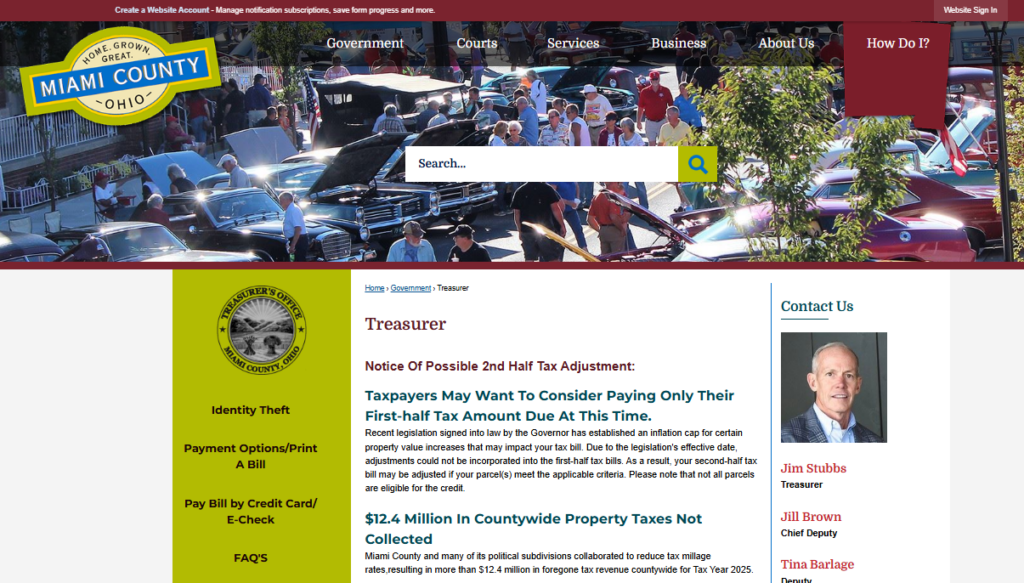
- Locate the “Parcel Search” tool on the homepage.
- Enter either the property owner’s name, address, or parcel number.
- Click “Search” to view the property’s detailed record.
- Select the desired parcel to see current tax information, ownership, and assessment history.
Using the Auditor’s site ensures users receive accurate, up-to-date tax details and can access official forms safely.
Ownership Info, Current Tax Info, Penalty Remission Form
Property owners can quickly verify ownership information and current tax amounts online. This section is essential for avoiding late payment penalties and maintaining accurate public records.
What to find:
- Ownership Info: Confirms the legal owner of the property.
- Current Tax Information: Shows total taxes due, including first-half and second-half amounts.
- Penalty Remission Form: Allows taxpayers to request a reduction or waiver of penalties if late fees are applied incorrectly.
Steps instructions:
- After finding the parcel in the Auditor’s search tool, click “View Tax Details.”
- Review the owner’s name, mailing address, and assessed value.
- Download the Penalty Remission Form directly from the property’s record page.
- Complete the form and submit it according to instructions, either online or at the Treasurer’s office.
This process gives residents control over their property records and ensures all tax payments are accurate and timely.
Homestead Reduction Application
The Homestead Reduction Application reduces taxes for qualifying homeowners. This program helps residents receive a lower property tax bill on their primary residence.
Steps to apply:
- On the Auditor’s website, locate the “Forms” section.
- Click Homestead Reduction Application.
- Fill out all required fields, including property parcel number and homeowner details.
- Submit the completed application either online or in person at the Treasurer’s office.
Property owners can track approval status and ensure exemptions are applied correctly before the next billing cycle.
Property Value Revision Complaint Form
If a property owner disagrees with the assessed value of their property, they can submit a Property Value Revision Complaint Form. This form allows taxpayers to request a review of their property assessment to ensure fair taxation.
Steps to complete:
- Visit the Auditor’s forms page.
- Select Property Value Revision Complaint Form.
- Fill out the property details, assessment concerns, and supporting documentation.
- Submit the form electronically or deliver it to the Treasurer’s office.
- Follow up with the Board of Revision if additional review is necessary.
Filing this form helps property owners confirm that their taxes reflect accurate valuations and protects their financial interests.
Forms & Documents
The Miami County Treasurer provides a full range of tax forms, exemption applications, and payment documents to help residents manage their property taxes and county financial obligations. These forms are available online and in print, giving taxpayers multiple ways to complete required filings efficiently. The Treasurer’s office plays a key role in financial management and county funds, and accurate documentation is essential to ensure proper collection and reporting of property taxes. Residents can find forms for real estate taxes, personal property taxes, and special exemptions directly from the Treasurer’s office. Using the correct forms helps prevent errors and ensures the timely processing of payments and requests.
Tax Forms for Property and Personal Taxes
The Treasurer’s office offers forms for all types of property tax filings, including:
- Real Estate Property Tax Form: For standard property tax payments.
- Personal Property Tax Form: For businesses or individuals with taxable personal assets.
- Tax Bill Payment Forms: Include instructions for mailing payments or paying in person.
Each form contains clear instructions and instructions aligned with financial management protocols, helping residents comply with legal requirements while supporting county operations. Printable versions are available in PDF format, ensuring they can be completed offline if necessary.
Exemption Applications and Special Forms
Residents may qualify for various exemptions that reduce taxable amounts. Key forms include:
- Homestead Reduction Application: For eligible homeowners seeking property tax relief.
- Property Value Revision Complaint Form: Allows residents to challenge assessed property values.
- Remission of Penalty Form: For taxpayers requesting forgiveness of late payment penalties under certain conditions.
These applications contribute to county funds management by ensuring all adjustments and exemptions are properly documented. Clear instructions and submission guidelines reduce errors and speed processing.
Accessing and Submitting Forms
The Treasurer’s office encourages residents to complete forms accurately and submit them according to the instructions. To make it easier, forms are organized under categories like “Property Taxes,” “Exemptions,” and “Payments”. Bullet points and headings on each document highlight required fields and deadlines.
- Printable Forms: Available for download and offline completion.
- Submission Methods: Forms can be mailed, delivered in person, or submitted via approved electronic methods.
- Support: Staff in the Treasurer’s office are available to clarify any questions about forms or filing requirements.
Proper use of these forms helps maintain transparent and efficient financial management, supporting the Treasurer’s responsibilities in collecting and managing county funds.
Office Location & Contact Details
Residents can reach the treasurer’s office in Miami County using the following contact information:
- Address: Safety Building, 201 W. Main St., First Floor, Troy, OH 45373
- Phone: 937-440-6045
- Fax: 937-440-3565
- Email: mailto:treasurer@miamicountyohio.gov
The office operates Monday through Friday, 8 a.m. to 4 p.m., providing consistent support for all property tax and financial inquiries.
Meet the Treasurer & Staff
The office team includes experienced officials committed to proper financial management and accurate handling of county funds. Key staff members include:
- Jim Stubbs, Treasurer – oversees overall office operations and county investments
- Jill Brown, Chief Deputy – manages office administration and tax collection
- Tina Barlage, Deputy – assists with tax billing and parcel inquiries
- Megan Seeberger, Deputy – coordinates forms and customer support
- Mary Peltier, Deputy – handles payments and property tax records
Residents seeking parcel information, homestead exemptions, or tax adjustments can contact any of these staff members during office hours. Clear guidance is provided on payment procedures, form submission, and real estate tax collection, ensuring efficiency and transparency.
FAQ – About Treasurer
Property taxpayers often have questions about payments, exemptions, and how their tax dollars are used. This FAQ provides clear answers to common concerns, helping residents of Miami County understand services offered by the Treasurer’s office and how to manage their property taxes effectively.
How do I pay my property taxes?
Paying property taxes in Miami County is simple and can be done in person, by mail, or online. The Miami County Treasurer collects real estate taxes semi-annually, and payments should include the parcel number to ensure proper credit. Accepted methods include checks, money orders, and electronic payments. The Treasurer’s office also offers guidance on installment programs for eligible taxpayers. Timely payments help avoid penalties and interest. Residents can contact the office for questions or clarification on any payment method.
Can I pay online?
Yes, property taxes can be paid securely through the Miami County Treasurer’s online portal. The system allows credit/debit card and e-check payments while providing immediate confirmation of your transaction. Residents can also look up property information by parcel number to verify balances and bills. Online payments save time and reduce the need to visit the office. The portal ensures accurate tracking of county funds and public funds collected. It is mobile-friendly and accessible from any device for convenience.
What if I did not receive my tax bill
If a tax bill is missing, the taxpayer is still responsible for payment. Residents can request a duplicate bill by contacting the Treasurer’s office directly. Property information is also available on the Miami County Auditor’s website, including ownership, current tax data, and penalty remission forms. Payments must be made on time to avoid additional interest or penalties. Using your parcel number ensures funds are credited correctly. The office staff can assist with any issues regarding missing or incorrect bills.
How do I apply for a homestead exemption?
The homestead exemption lowers property taxes for qualifying homeowners and requires an application submitted to the Treasurer’s office. Applicants must provide proof of ownership and primary residence. Eligible residents include seniors, veterans, and others meeting specific criteria. Approved exemptions reduce the property tax collection amount directly on the bill. The Treasurer’s office guides residents through the process to ensure accuracy. This helps distribute county funds fairly and efficiently.
How are my tax dollars used?
Taxes collected by the Miami County Treasurer fund essential local services like public safety, education, and infrastructure. The Treasurer manages these public funds with careful oversight and investment to ensure maximum efficiency. Each payment contributes to community programs and supports the county’s financial stability. Reports and audits maintain transparency in how money is spent. Residents can request information on fund allocation at any time. Proper management ensures accountability and confidence in the county’s finances.